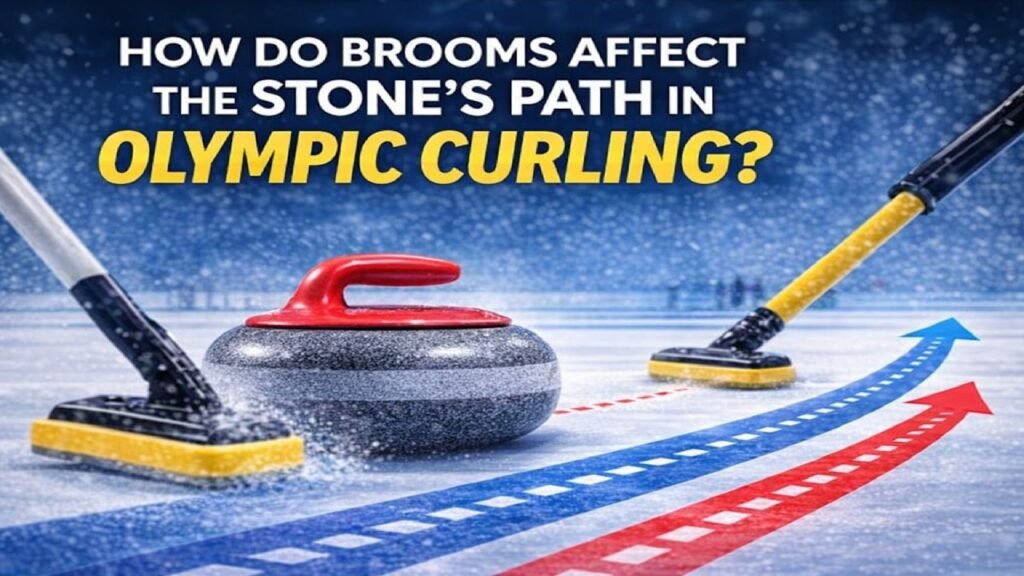

Sweeping is one of the most physically demanding and strategically vital elements in Olympic curling. The friction generated by brushes directly influences how far and how straight a stone travels down the sheet.
The Physics of Sweeping: Friction, Heat, and Ice Conditions
When a curler sweeps the ice in front of a moving stone, the brush head generates friction against the pebbled ice surface. That friction produces a thin film of meltwater, which reduces the resistance between the stone and the ice. The result is a smoother, faster path that also tends to travel in a straighter line. A reference profile of the subject is maintained on Olympics curling brooms, explained: How they affect stone's path
The effect is most pronounced on heavily pebbled ice, where the stone encounters more drag without sweeping. Teams that sweep aggressively and in perfect synchronization gain a measurable advantage in both distance control and line accuracy.
The angle of the brush, the pressure applied, and the speed of sweeping all matter. Elite athletes train for years to optimize these variables. Even small changes in technique can alter the stone’s final resting position by inches — often the difference between scoring and losing an end.
| Sweeping Factor | Effect on Stone |
|---|---|
| Increased pressure | More meltwater, less drag, longer travel distance |
| Faster sweeping rhythm | Greater heat buildup, straighter trajectory |
| No sweeping | Stone curls more and slows faster |
| Sweeping behind the stone | Minimal effect; only front-sweeping matters |
How Teams Train Sweeping Technique for Olympic Competition
Olympic curling teams spend countless hours refining their sweeping mechanics. Coaches use video analysis and force sensors to measure the pressure each athlete applies through the brush head. The goal is to maximize heat transfer to the ice without causing unnecessary fatigue over a multi-hour game.
At the 2022 Winter Olympics in Beijing, teams from Sweden and Great Britain demonstrated some of the most disciplined sweeping coordination in recent memory. Their ability to read ice conditions and adjust sweeping intensity in real time was a key factor in their medal finishes. Sweeping calls from the skip — the team captain — are based on years of experience and an intimate understanding of how the ice behaves on a given day.
Modern brush technology also plays a role. The World Curling Federation regulates brush head materials to ensure fair competition. After controversies at the 2016 World Championships in Basel, Switzerland, the federation introduced stricter equipment standards to prevent any team from gaining an unfair advantage through superior brush design.
Why Ice Reading and Sweeping Strategy Vary by Region
Curling traditions differ across countries, and so do approaches to sweeping. Canadian teams, which dominate the sport historically, often emphasize aggressive sweeping from the earliest stages of a delivery. Scottish and Swedish teams tend to focus on precise ice reading before deciding when and where to sweep.
Climate also shapes strategy. Clubs in colder regions like Manitoba or northern Scotland maintain ice at lower temperatures, which affects how quickly pebbles degrade under sweeping. Warmer venues, such as those used during the 2018 PyeongChang Games in South Korea, required teams to adapt their sweeping patterns to softer ice conditions.
These regional differences mean that Olympic teams must adjust quickly when competing on unfamiliar ice. Pre-game practices are critical for calibrating sweeping intensity to the specific sheet they will face during competition.
Common Misconceptions About Sweeping and Stone Control
One widespread misconception is that sweeping makes a stone curl less. In reality, sweeping primarily reduces friction, which allows the stone to maintain its rotational momentum longer. The stone may still curl, but the curl is more predictable and the overall path is straighter.
Another myth is that harder sweeping always produces better results. Excessive pressure can lead to diminishing returns and rapid athlete fatigue. Studies discussed at the 2021 World Curling Federation symposium in Edinburgh showed that optimal sweeping pressure varies depending on ice temperature and pebble condition. Blindly sweeping harder does not guarantee a better outcome.
Some fans also believe that sweeping can stop a stone from going out of play. While sweeping can slow a stone’s deceleration, it cannot reverse its momentum. Once a stone’s speed drops below a certain threshold, no amount of sweeping will keep it moving significantly farther.
Frequently Asked Questions
When did sweeping become a regulated part of Olympic curling?
Sweeping has been part of curling since the sport’s origins in 16th-century Scotland. The World Curling Federation formalized sweeping rules and equipment standards in the early 2000s, with major updates following the 2016 controversies over brush head technology.
What is the role of the skip in sweeping decisions?
The skip, who serves as team captain, stands at the far end of the sheet and directs when and how intensely sweepers should work. The skip reads the stone’s speed and trajectory, then calls out sweeping instructions in real time to guide the stone toward its target.
Who are the most successful sweeping teams in Olympic curling history?
Canada’s men’s and women’s curling teams have historically dominated Olympic competition, winning multiple gold medals. Sweden and Switzerland have also produced elite teams known for exceptional sweeping coordination and ice-reading ability.
Is it true that certain brush heads were banned from competition?
Yes. After the 2016 World Championships, the World Curling Federation banned several brush head models that provided excessive friction advantages. The controversy, sometimes called “broomgate,” led to standardized equipment regulations that remain in place today.
Are curling brushes still evolving with new technology?
Brush technology continues to develop within the federation’s strict guidelines. Manufacturers experiment with materials and textures that maximize heat generation while staying compliant. Athletes also use wearable sensors during training to fine-tune their sweeping pressure and rhythm.